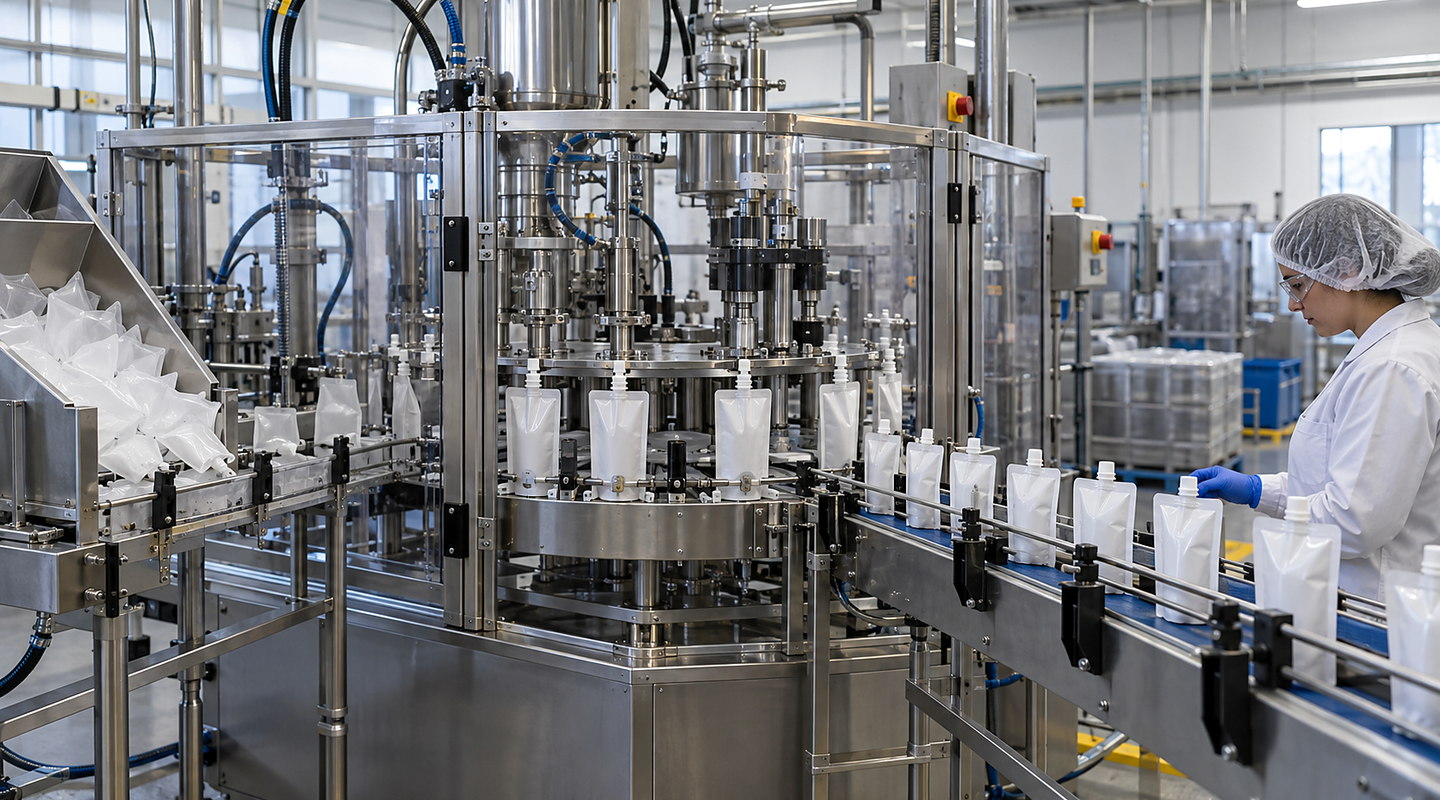
Detergent Pouch Packing: How the Process Works
Plan liquid-detergent pouch filling from product and pouch samples through foam, nozzle cut-off, closing, cleaning and accepted-pack output trials.
A liquid-detergent pouch process must fill and close the actual pack under representative production conditions. Confirm whether the pouch is filled through its open mouth or a fitment. Trial foam, drips and the cleanliness of the closure area, then assess fill quantity, closing, coding and handling together. Count accepted completed packs after normal replenishment and rejects.
Use the pouch and spout format guide and acceptance-test planning guide. A detergent powder application requires a separate product and dosing assessment; a liquid refill-pouch trial does not establish powder-handling suitability.
Understand the complete route from input to accepted output — Detergent Pouch Packing
Plan detergent pouch packing around your product, pack range, target output, cleaning needs and finished-pack checks. Discuss a practical line concept with Lancing using representative samples. Follow the liquid detergent and pouch through filling, closing and handling; include replenishment, restart, cleaning and changeover in the real cycle.
Discuss your application

Four clear stages for detergent pouch packing
At each stage, you can review how liquid detergent behaviour and finished-pack checks and reject handling affect the next commitment.
- 01
Review Representative Product and Pack Samples
Provide the actual liquid detergent, safety and technical data, filling temperature and target quantity. Include converted pouch drawings, usable openings, gussets and any spout or closure, with normal and difficult pack examples.
- 02
Trial the Dosing, Handling or Closing Method
Trial product arrival and dosing through nozzle withdrawal and pouch closing. Observe foam during startup, refilling and restart after a pause, along with drips, strings, splash and detergent in the closure area. Agree acceptable fill presentation and the settling time available.
- 03
Integrate Infeed, Discharge, Controls and Access
Review pouch support, nozzle access and the transfer from filling to closing and discharge. Coordinate infeed, services, controls and safe cleaning access with the line layout. Review wetted materials, seals, hoses and the laminate or fitment with the responsible product and packaging teams.
- 04
Run Agreed Production and Changeover Checks
Assess fill quantity, closure condition, external cleanliness, coding and handling together. Keep samples from startup, steady production and restart. Record accepted packs after normal replenishment and rejects, then measure changeover from the last accepted pack to release of the next product.
Decisions and results stay connected
| Stage | What happens | What you can review |
|---|---|---|
| Review Representative Product and Pack Samples | Provide the actual liquid detergent, safety and technical data, filling temperature and target quantity. Include converted pouch drawings, usable openings, gussets and any spout or closure, with normal and difficult pack examples. | Formulation and safety data, filling conditions, target quantity and identified pouch/closure variants. |
| Trial the Dosing, Handling or Closing Method | Trial product arrival and dosing through nozzle withdrawal and pouch closing. Observe foam during startup, refilling and restart after a pause, along with drips, strings, splash and detergent in the closure area. Agree acceptable fill presentation and the settling time available. | Foam, cut-off and closure-area observations, restart cases and the agreed acceptable fill presentation. |
| Integrate Infeed, Discharge, Controls and Access | Review pouch support, nozzle access and the transfer from filling to closing and discharge. Coordinate infeed, services, controls and safe cleaning access with the line layout. Review wetted materials, seals, hoses and the laminate or fitment with the responsible product and packaging teams. | Pouch support and transfer sequence, line interfaces, material-compatibility questions and cleaning access. |
| Run Agreed Production and Changeover Checks | Assess fill quantity, closure condition, external cleanliness, coding and handling together. Keep samples from startup, steady production and restart. Record accepted packs after normal replenishment and rejects, then measure changeover from the last accepted pack to release of the next product. | Completed-pack results, accepted output basis, changeover/cleaning records, retained samples and unresolved actions. |
Keep connected responsibilities clear
Your final detergent pouch packing scope must also account for cleaning, access and changeover method, finished-pack checks and reject handling, current regulations and the conditions at your site.
- Chemical compatibility, vapour, dust and hazardous-area duties require substance-specific assessment.
- The selected method must be trialled with representative product and packaging.
- Supplier tolerances and product-condition changes can alter handling or fill behaviour.