In brief

Compare detergent pouch applications by the actual formulation, pack and production pattern. Routine work needs stable filling, closing and accepted-pack output through replenishment and restart. Short runs also need a review of format and formulation changes, cleaning, residual product and the time until the next product is released. These are separate trial questions, even when the nominal fill quantity is unchanged.

Start with liquid-detergent filling behaviour and the application information checklist. Powder detergent and other product types need their own assessment; this liquid refill-pouch scope does not establish their suitability.

On the production floor

Match the solution to your liquid detergent, pouch format and production pattern

Plan detergent pouch packing around your product, pack range, target output, cleaning needs and finished-pack checks. Discuss a practical line concept with Lancing using representative samples. Use the application examples to compare routine production using detergent refill-pouch packaging with short runs and format changes involving detergent refill-pouch packaging.

Discuss your application
Application 1

Routine Production Using Detergent Refill-Pouch Packaging

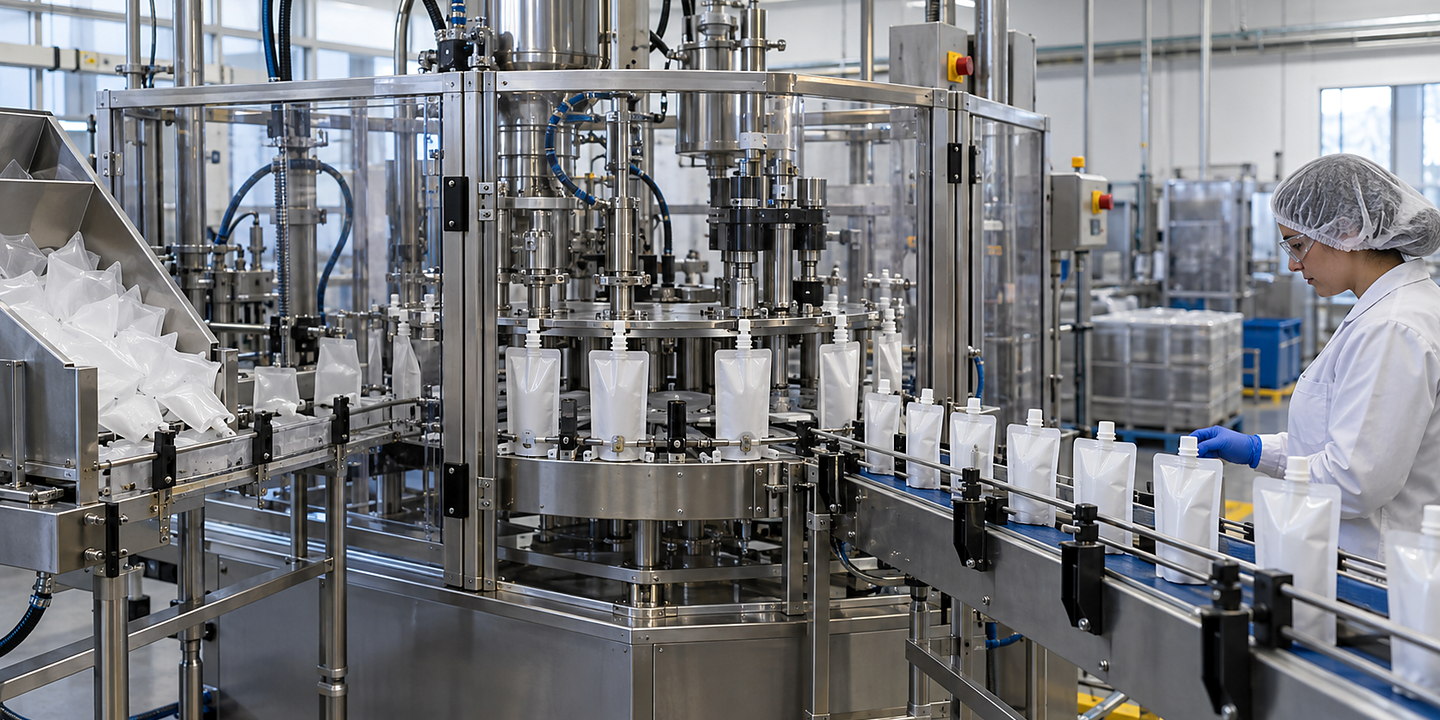
Trial the real detergent and pouch range through startup, stable production, product replenishment and restart after a pause. Observe foam, nozzle cut-off and the closure area. Define acceptable fill quantity, closing, external cleanliness, coding and handling, then record accepted completed packs after rejects and routine interruptions.

Explore this application
Application 2

Short Runs and Format Changes Involving Detergent Refill-Pouch Packaging

List changes in pouch opening, gusset, spout or closure as well as fragrance, colour and formulation. Review support, nozzle access and closing arrangements for each format. Map retained detergent and cleaning liquid through tanks, transfer lines, pumps and nozzles; agree permitted carryover and measure the changeover to release of the next product.

Explore this application
Choose the right route

Four questions that can change the recommended approach

What arrives?

Provide the actual liquid detergent at representative filling conditions, safety and technical data, plus normal and difficult converted pouches, spouts and closures. Identify product or packaging changes that could alter foam, filling access or closing.

What must happen?

Define the target fill and acceptable completed pack, including closing, external cleanliness, coding and handling. State the available time between filling and closing and the accepted output required after rejects and normal replenishment.

What surrounds it?

Record the infeed, discharge, support and line interfaces, available services and space. Review cleaning access, tanks, transfer lines, pumps, nozzles and drain points together with formulation and format changes.

What result do you need?

Agree representative startup, steady-production, restart and changeover trials. Retain pack samples, closure-area observations, accepted-output records and unresolved compatibility or packaging checks for the responsible teams to review.

ApproachOften suitable whenWatch for
Detergent Pouch PackingA defined liquid formulation and pouch/spout range need coordinated filling, closing and line interfaces.Chemical compatibility, vapour, dust and hazardous-area duties require substance-specific assessment.
Semi-Automatic Equipment for Lower-Volume or High-Changeover WorkYour volumes, product mix or operator judgement make a simpler route more practical.Check ergonomics, consistency and safe access before choosing the lower-complexity option.
Fully Automatic Line Integration where Repeatable Container Flow and Rate Justify ItYour surrounding process is stable enough for a broader automated solution to add value.Allow for line connections, fault recovery and maintenance as well as the headline equipment.